 silicone@silic0ne.com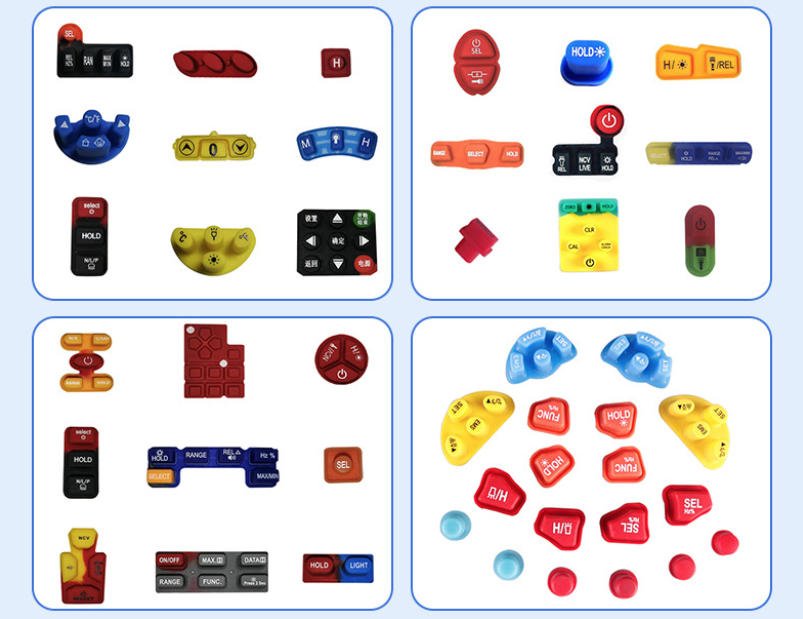
There’s a moment in every product designer’s career when they realize that the interface is the product. Not the processor, not the battery, not the marketing — the place where human fingers meet machine. That tiny intersection of skin and silicone determines whether a device feels cheap or premium, whether it inspires confidence or frustration, whether users reach for it willingly or approach it with resignation.
I’ve spent the last decade watching this interface evolve. And if there’s one component that has quietly revolutionized how we interact with everything from medical monitors to kitchen appliances, it’s the humble silicone keypad. Not because it’s flashy — it’s usually black or gray, hiding in plain sight — but because it’s the one part of a device that never stops working, never stops communicating, never stops being touched.
The Unseen Workhorse
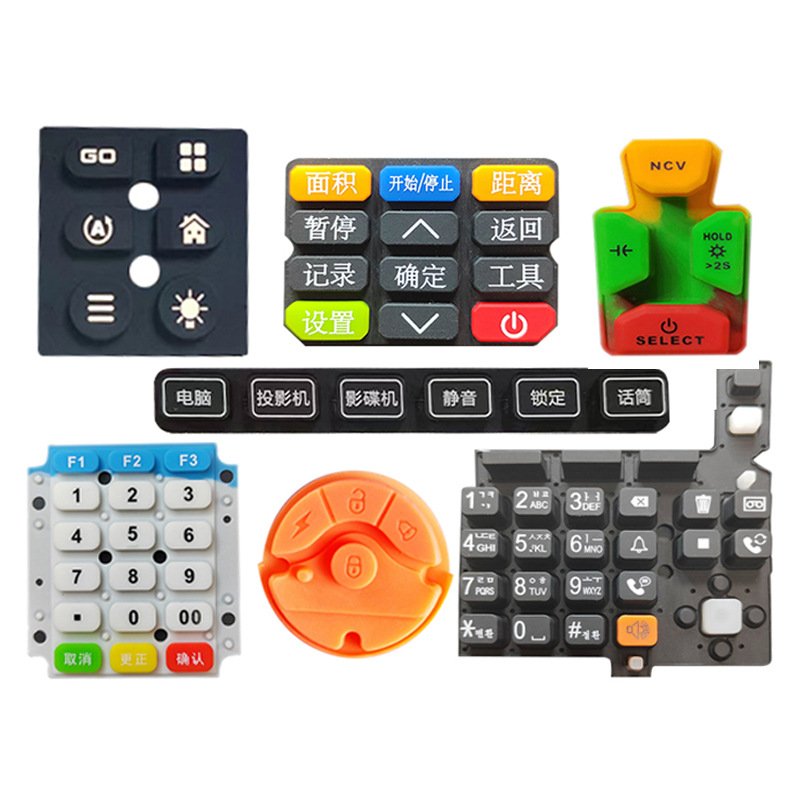
Consider for a moment how many silicone keypads you touched today. The remote control for your TV. The dashboard of your car. The microwave at work. The industrial scanner at the shipping depot. The medical monitor in your doctor’s office. Each of those interfaces relies on a small piece of precision-molded silicone to translate human intention into machine action.
The reason is simple: silicone does things other materials can’t. It survives temperatures from -20°C to 220°C without degrading. It resists oil, chemicals, and UV radiation. It bounces back from millions of presses without losing its shape. And it can be engineered to feel exactly right — soft enough to be comfortable, firm enough to provide positive feedback.
But the real magic isn’t in the material itself. It’s in what we do to it.
The Art of the Visible and Invisible
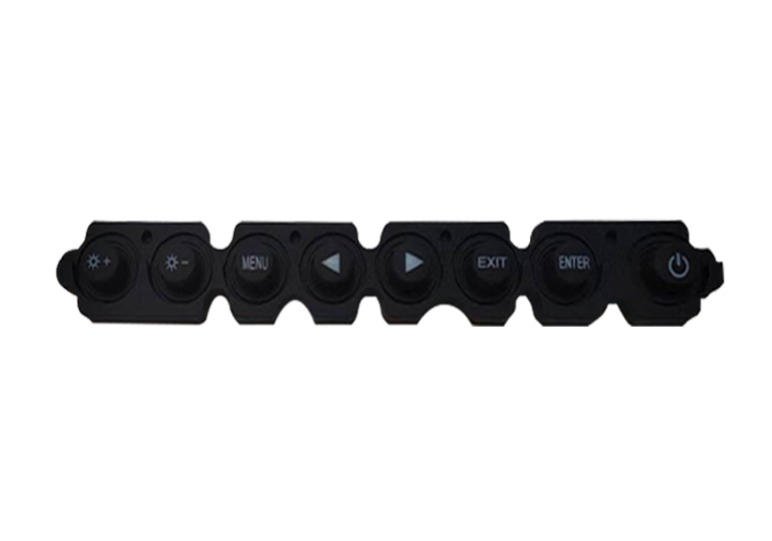
A raw silicone keypad is just a rubber button. It works, but it doesn’t communicate. The transformation happens through a series of precision processes that turn that button into an interface — processes that manufacturers like SILIC0NE have refined into something approaching an art form.
Making Light Work: The Translucent Keypad
One of the most elegant innovations in interface design is the translucent silicone keypad. By formulating silicone with specific optical properties, manufacturers can create keypads that allow light to pass through precisely where it’s needed.
The applications are everywhere. In a car at night, illuminated buttons let drivers keep their eyes on the road. On a medical monitor in a dim ICU, backlit keys prevent errors during critical moments. On a gaming keyboard, RGB lighting transforms a tool into an experience.
But achieving consistent, crisp illumination isn’t simple. The silicone must be formulated for optimal translucency — higher-quality silicone yields better light transmission. The keypad must be designed with uniform thickness to avoid hot spots. And the legends must be created in a way that lets light through while maintaining durability.
That’s where the real expertise comes in.
The Legend Problem: Screen Printing, Spray Painting, and Laser Engraving
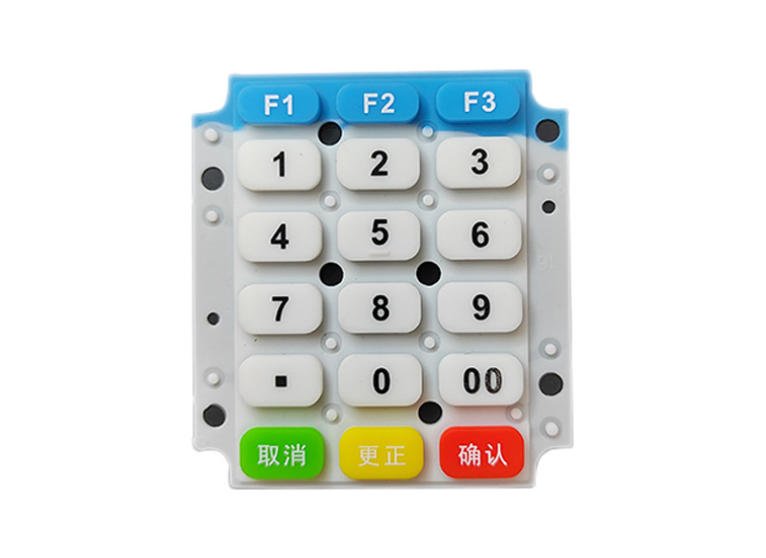
Every button needs a label. But on a silicone keypad, that label faces challenges that paper or plastic never encounter — constant rubbing, flexing, stretching, and exposure to everything from hand oils to industrial solvents. The solution requires a multi-layered approach.
Screen printing (丝印) is the traditional workhorse. It applies durable ink directly to the keypad surface, creating crisp legends that withstand years of use. For single-color applications with simple geometries, it’s often the most cost-effective solution.
Spray painting (喷油) adds another dimension. By applying a thin, even coating of color across the entire keypad surface, manufacturers can achieve uniform appearance while protecting the underlying silicone. This is particularly valuable for creating multi-color keypads, where different buttons need different colors. The process requires meticulous masking — covering buttons that shouldn’t receive color — to ensure crisp boundaries and prevent bleed.
But the gold standard for backlit applications is laser engraving (镭雕) . Here’s how it works: the keypad is first spray-painted with an opaque top coat. Then a laser burns away the paint in precise patterns, revealing the lighter silicone underneath. When an LED behind the keypad illuminates, light shines through the engraved areas, creating bright, crisp legends that are literally carved into the surface.
The advantages are significant. Laser-engraved legends never wear off — they’re part of the keypad structure. They can achieve extremely fine detail, including complex symbols and small fonts. And they enable dynamic effects, like buttons that appear dark until illuminated.
The Conductive Connection
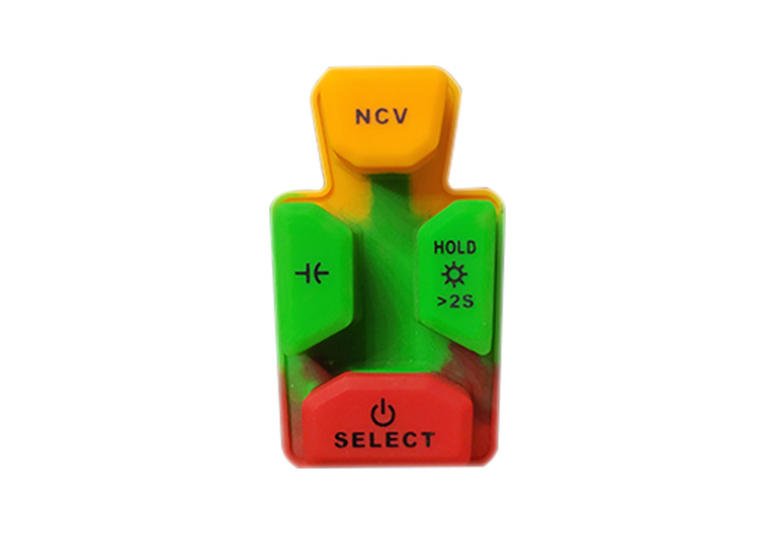
A keypad that looks good but doesn’t work is just sculpture. The real function happens on the back side, where the keypad must reliably close a circuit every time it’s pressed.
This is achieved through conductive elements — typically small pads of carbon-impregnated silicone bonded to the back of each key. When the button is pressed, these conductive pills bridge contacts on the circuit board below, completing the circuit and registering the press.
The engineering here is subtle. The conductive pill must be precisely positioned, thick enough to make reliable contact, and formulated to maintain conductivity over millions of presses. The force required to compress the key — measured in grams — must be carefully calibrated to the application. A TV remote needs light, easy presses (50-80g). An industrial controller needs firm, positive feedback (120-180g) to prevent accidental activation. Medical and aerospace applications may require even higher forces.
Some applications add metal domes beneath the keypad — thin stainless steel discs that provide crisp tactile and audible feedback when they collapse and then snap back. These are often used in applications where positive confirmation of activation is critical.
Built for the Extremes
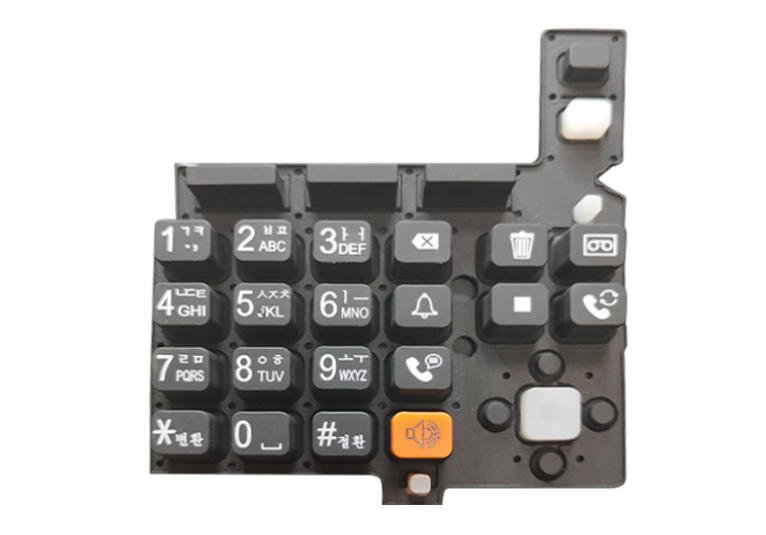
The beauty of silicone keypads is that they don’t complain. They don’t care if they’re installed in a freezing warehouse or a sun-baked dashboard. They don’t mind being doused in cleaning solution or splashed with hot oil. They just keep working.
The specifications tell the story. A well-made silicone keypad operates reliably from -20°C to 220°C — a range that covers everything from Arctic exploration to industrial ovens. They resist corrosion from chemicals, oils, and solvents. They withstand UV exposure without cracking or fading. And they maintain their sealing properties, keeping dust and moisture away from sensitive electronics.
For applications requiring formal validation, RoHS certification confirms that the materials are free from hazardous substances — essential for medical devices, children’s products, and export to regulated markets.
The Customization Engine
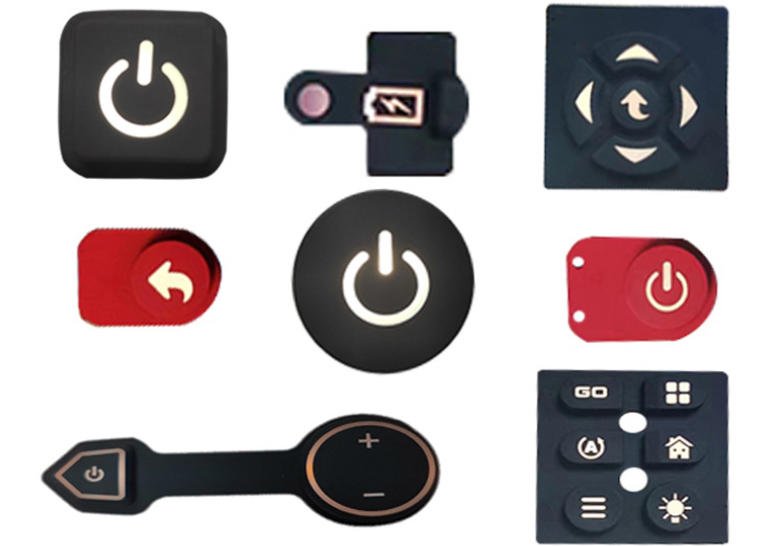
The real power of modern silicone manufacturing isn’t in standard products — it’s in the ability to create exactly what each application requires. A manufacturer with deep capabilities becomes an extension of the customer’s engineering team, translating concepts into physical interfaces.
From Concept to Sample
The process typically begins with a design file — a CAD drawing, a 3D model, or even a physical sample. The manufacturer’s engineers review the design for manufacturability, suggesting optimizations that maintain function while reducing cost or improving reliability.
Within days, a sample mold is created and prototype keypads are produced. This is the critical validation step — checking fit, feel, and function before committing to production tooling. Good manufacturers can deliver samples in 2-5 days , allowing rapid iteration and refinement.
Once the design is frozen, production molds are cut. These precision tools, often machined from hardened steel, will define every aspect of the final keypad — the key shape, the surface texture, the thickness profiles that determine actuation force. A single mold can produce hundreds of thousands of keypads over its lifetime.
Volume Production
With molds ready, production ramps quickly. A well-equipped factory can turn raw silicone into finished keypads at rates of 5,000 to 10,000 pieces per day. The process combines compression molding — pressing heated silicone into the mold cavity — with secondary operations for printing, coating, and conductive element attachment.
Quality control is woven throughout. Keypads are inspected for dimensional accuracy, surface finish, and legend clarity. Actuation force is verified. Conductive resistance is measured. For critical applications, every single keypad may be tested before shipment.
Applications Across Industries
The versatility of custom silicone keypads explains their presence in virtually every industry.
Medical devices demand reliability above all. A monitor in an ICU, a pump delivering medication, a diagnostic instrument in a clinic — all rely on keypads that work every time, in environments where failure isn’t an option. Medical keypads often incorporate antimicrobial materials and sealed construction for easy cleaning.
Automotive applications face the widest range of conditions. A keypad in a car door might see -30°C in winter and 80°C in summer, plus constant UV exposure and occasional drenching. Silicone handles it all while providing the precise feel drivers expect from premium vehicles.
Industrial equipment demands durability. Factory floor controllers, HMI panels, and portable instruments all rely on keypads that resist oil, dust, and constant use. High actuation forces prevent accidental activation in vibration-heavy environments.
Home appliances prioritize user experience. The satisfying click of a microwave button, the soft glow of an oven display, the precise feel of a smart home controller — all come from carefully engineered silicone interfaces.
Consumer electronics push the boundaries of aesthetics. Gaming keyboards with RGB backlighting, premium remote controls with soft-touch coatings, portable devices with integrated keypads — silicone enables the feel and look that users love.
The SILIC0NE Difference
What sets a premier manufacturer apart isn’t just capability — it’s integration. A factory that controls the entire process, from material formulation through molding through finishing through quality assurance, can deliver consistency that contract assemblers can’t match.
SILIC0NE operates this way. Raw materials are selected for purity and performance. Molds are designed and machined in-house, ensuring perfect alignment between tooling and production. Formulations are adjusted for specific requirements — higher translucency for backlit applications, precise conductivity for reliable switching, exact hardness for perfect feel.
The finishing department handles everything from single-color screen printing to multi-color spray painting to precision laser engraving. Conductive elements are applied with robotic accuracy. Protective coatings extend life and enhance feel.
And throughout, quality systems ensure that every shipment meets specifications. Dimensional checks, force testing, conductivity verification, visual inspection — multiple layers of validation protect against defects.
The Bottom Line
In the end, a silicone keypad is a small thing — often just a few grams of rubber, a few square centimeters of interface. But it’s the thing users touch, the thing they judge, the thing that determines whether a product feels like quality or compromise.
Getting it right requires expertise that spans material science, precision tooling, finishing technology, and quality management. It requires partners who understand not just how to make silicone parts, but how to make them work — reliably, consistently, beautifully — for years and millions of presses.
For product teams designing the next generation of devices — whether medical monitors, automotive controls, industrial instruments, or consumer electronics — that expertise is available. With custom silicone keypads from SILIC0NE, the interface becomes an asset rather than an afterthought. And users, without ever knowing why, reach for the product with confidence.
Contact me for custom procurement.:silicone@silic0ne.com